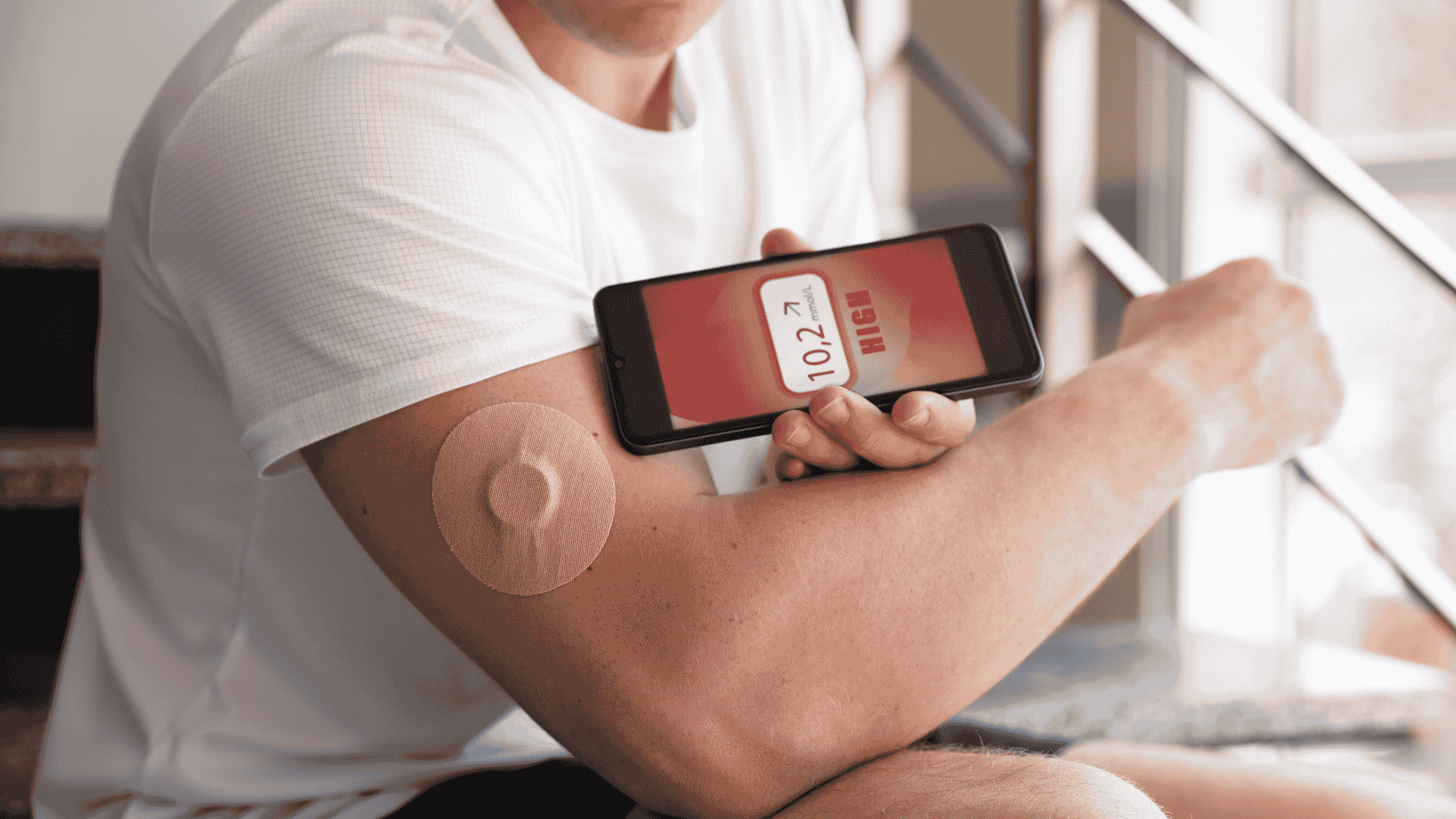
Needle-Free Glucose Monitoring: What Is Biolinq Shine and Who Is It For?
What if you could track your glucose without the usual sensor insertion? That’s the idea behind Biolinq Shine, a new wearable glucose-monitoring device that recently received FDA clearance for over-the-counter use in those who don’t use insulin.
Let’s look at how it works, who it’s designed for, and how it compares with a traditional CGM.
What Is Biolinq Shine?
Biolinq Shine is a wearable glucose sensor that tracks glucose levels without a traditional sensor filament.
Worn on your forearm, it uses tiny semiconductor-based microsensors just below the skin’s surface to track three things:
- Glucose levels
- Physical activity
- Sleep patterns
It also has a built-in, color-changing LED display that gives you a quick look at your glucose range. You don’t need a phone to see this information, although an optional app provides more detailed insights.
The goal is to help you understand how everyday habits, such as what you eat, how much you move, and how well you sleep, may affect your glucose levels.
How Does Biolinq Shine Work Without a Needle?
Traditional CGMs use a small sensor filament to measure glucose in the fluid between your cells. Biolinq Shine measures glucose in the same fluid but uses seven tiny microsensors instead.
Once applied using its single-use applicator, the wearable starts working automatically. You don’t need to evaluate it with fingerstick readings.
Its LED display uses different colors to show your glucose range:
- Blue: Glucose is within the target range (70–180 mg/dL).
- Yellow: Glucose is above the target range (181–400 mg/dL).
- Red: Glucose is below 70 mg/dL.
The optional app provides a closer look at your glucose information and helps you connect the dots between your meals, activity, and sleep.
How Is Biolinq Shine Different From a Traditional CGM?
Both devices measure glucose using sensors placed under the skin, but they offer different experiences.
Here’s a quick comparison:
- Sensor placement: Biolinq Shine uses tiny microsensors, while traditional CGMs use a small sensor filament.
- Glucose information: Biolinq Shine displays color-coded glucose ranges, while traditional CGMs generally provide numerical readings and trends.
- Smartphone sync: Biolinq Shine has an optional app, while traditional CGMs usually connect to a compatible app or reader.
- Additional tracking: Biolinq Shine tracks glucose, activity, and sleep, while traditional CGMs primarily focus on glucose monitoring.
- Intended users: Biolinq Shine is designed for adults aged 22 and older who don’t use insulin. Traditional CGMs serve different groups of people with diabetes, depending on the device.
- Medical decisions: Biolinq Shine isn’t intended for insulin dosing or medication adjustments. Certain approved CGMs can support treatment decisions, depending on the device.
The important thing to remember? Biolinq Shine isn’t simply a traditional CGM without a needle. It provides a simplified view of glucose ranges rather than the detailed numerical readings offered by many traditional CGMs. The two devices aren’t interchangeable.
Who Is Biolinq Shine Designed For?
Biolinq Shine is intended for adults aged 22 and older who don’t use insulin.
It may be worth learning about if you:
- Have Type 2 or gestational diabetes and manage your condition without insulin.
- Want to understand how meals, activity, and sleep relate to your glucose patterns.
- Prefer a wearable that doesn’t require traditional sensor insertion.
- Want a simpler way to become more aware of your glucose ranges.
However, if you have Type 1 diabetes, use insulin, or rely on an automated insulin delivery system, Biolinq Shine isn’t intended to replace your prescribed CGM.
It’s also not designed to guide treatment decisions or medication changes. Talk with your healthcare provider before choosing a new glucose-monitoring device.
Can Biolinq Shine Replace Your CGM or Blood Glucose Meter?
Short answer: No.
Each device serves a different purpose:
- Biolinq Shine: Helps you become more aware of glucose ranges and how daily habits may affect them.
- Traditional CGM: Provides detailed glucose readings and trends to support diabetes management.
- Blood glucose meter: Gives you a snapshot of your blood glucose at the time you check it using a fingerstick.
The right option depends on your health needs and treatment plan.
Is Biolinq Shine Available Yet?
In September 2026, the U.S. Food and Drug Administration (FDA) granted Biolinq Shine clearance for over-the-counter use. This means eligible adults can access the device without a prescription.
However, FDA clearance doesn’t mean the device is suitable for everyone. It’s also different from traditional FDA approval. Biolinq Shine received 510(k) clearance, not traditional FDA approval.
As of November 2026, we haven’t found a confirmed retail launch date or published pricing. You can visit the official Biolinq website for product updates.
The Future of Glucose Monitoring Is Changing
For a long time, glucose monitoring has meant fingersticks or wearable sensors that require insertion under the skin. Newer technologies are beginning to offer more choices for people who don’t use insulin.
Biolinq Shine is one example, with a focus on simpler wearables, easier access, and a better understanding of how everyday habits affect glucose.
But remember, the best glucose-monitoring device isn’t necessarily the newest one. It’s the one that meets your health needs and fits into your diabetes care plan.
Summary
Biolinq Shine is a needle-free glucose sensor that tracks glucose, activity, and sleep. FDA-cleared for OTC use, it’s designed for adults aged 22 and older who don’t use insulin. Unlike traditional CGMs, it provides color-coded glucose range information rather than detailed numerical readings. While it offers a new option for glucose awareness, it isn’t a replacement for traditional CGMs or blood glucose meters when more detailed monitoring is needed. Talk with your healthcare provider before choosing a glucose-monitoring device.